HORSE & SPARROW
Mit Arbeiten von:
Hélène Janicot, Keith Macisaac & Nicolai Olesen
13.06. - 23.08.2026
Eröffnung am 12.06.2026, ab 19 Uhr
DE
Seit der Unsichtbaren Hand hat die ökonomische Theorie kein schärferes Bild geprägt als das des trickle-down effects, laut dem Wohlstand von oben nach unten durchsickere. Es ist diese ökonomische Metapher, welche die Ausstellung „Horse & Sparrow“ in Anschlag bringt, da sich hier erstaunliche Analogien zu aktuellen ästhetischen Strategien auftun, sodass man mithin von trickle-down aesthetics sprechen kann. Allerdings bezieht sich die Ausstellung auf den verulkenden Spitznamen der horse-and-sparrow theory, denn, so der US-Ökonom John Kenneth Galbraith in seinen Memoiren, „wenn man einem Pferd genug Hafer gibt, wird auch etwas auf die Straße durchkommen, um die Spatzen zu füttern.“
Die in der Ausstellung „Horse & Sparrow“ gezeigten Arbeiten von Hélène Janicot (*1999, FR), Keith MacIsaac (*1968, SCT) und Nicolai Olesen (*1998, DK) haben - vereinfacht gesprochen - einen geschlossenen Werk- und Objektbegriff zugunsten einer diffusen, fluiden Ästhetik aufgegeben haben. Insbesondere Bildhauerisch dockt diese Ästhetik lose auf dem von Robert Morris geprägten Begriff der Anti-Form an, ohne jedoch darin aufzugehen. Formalästhetisch lässt sich ein auswucherndes Moment feststellen, welches sich in einer materiellen Entgrenzung ausagiert, die jedoch auch als ein Auseinanderfallen funktionieren kann. Fallweise verbinden sich die formalen Aspekte mit einer weltanschauliche Note, die der Verwendung ‚armer‘ Materialien und dem Nachvollzug von Zirkulationsbewegungen innewohnt. Oder in Strategien radikaler künstlerischer Anneignung, wie sie MacIssac ausagiert, wenn er eine Arbeit von Michael Asher entführt.
ENG
Since the Invisible Hand, no image has shaped economic theory more powerfully than that of the trickle-down effect, according to which prosperity trickles down from the top. It is this economic metaphor that the exhibition “Horse & Sparrow” takes as its starting point, as it draws striking parallels with current aesthetic strategies, such that one might speak of trickle-down aesthetics. However, the exhibition refers to it's tongue-in-cheek nickname of the horse-and-sparrow theory, for, as the US economist John Kenneth Galbraith wrote in his memoirs, ‘if you give a horse enough oats, some will inevitably fall onto the street to feed the sparrows.’
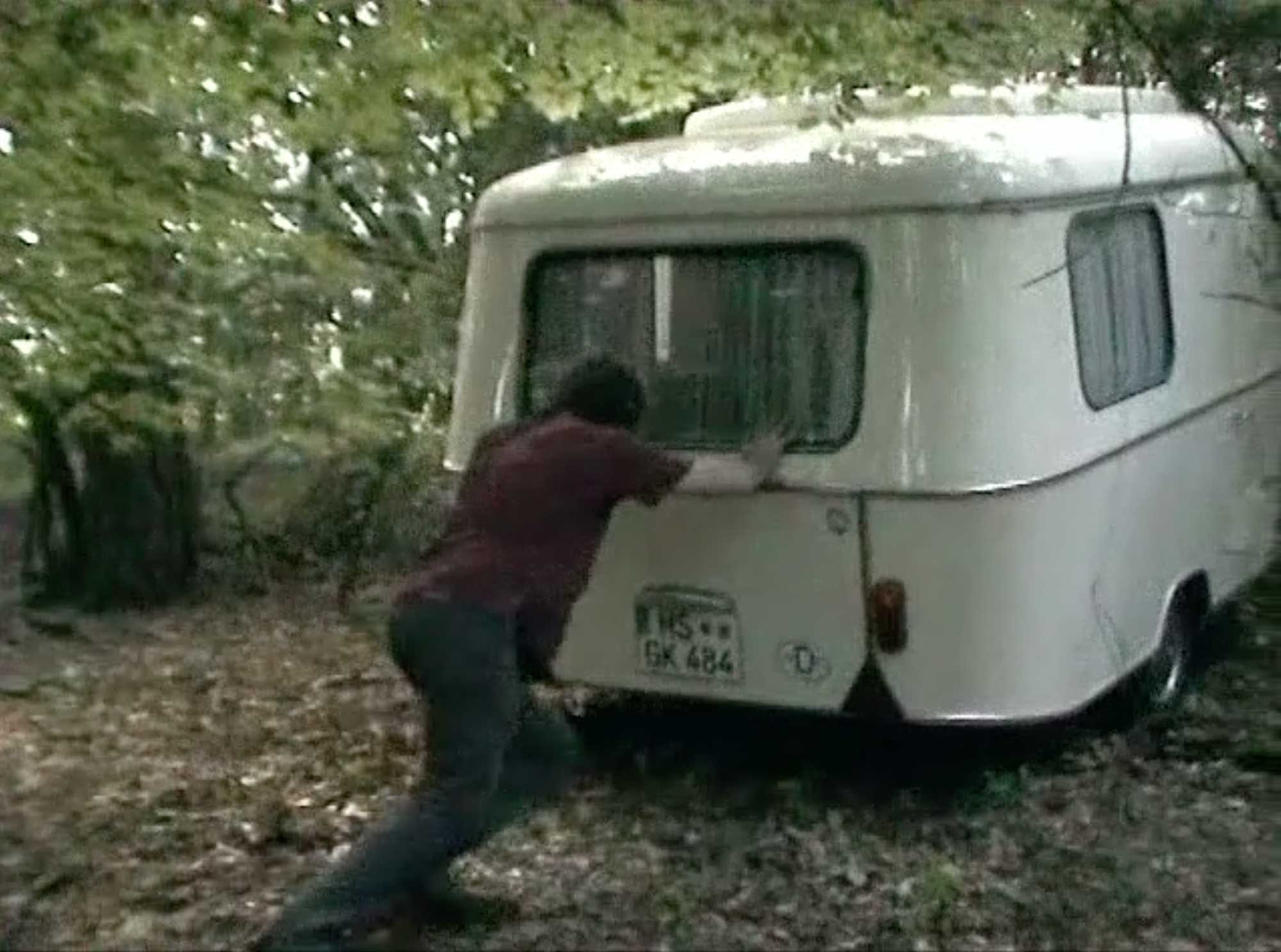
The works by Hélène Janicot (*1999, FR), Keith MacIsaac (*1968, SCT) and Nicolai Olesen (*1998, DK) shown in the exhibition “Horse & Sparrow” have – to put it simply – abandoned a closed understanding of work and object in favour of a diffuse, fluid aesthetic. In sculptural terms, in particular, this aesthetic loosely draws on the concept of anti-form coined by Robert Morris, without, however, being subsumed by it. Formally and aesthetically, one can observe a moment of proliferation that manifests itself in a material dissolution of boundaries, which can, however, also function as a disintegration. In some cases, the formal aspects are combined with an ideological note inherent in the use of ‘poor’ materials and the re-enactment of circulatory movements. Or in strategies of radical artistic appropriation, such as those enacted by MacIssac when he kidnaps a work by Michael Asher.
Die Ausstellung wird großzügig unterstützt von: / The exhibition is generously supported by:
Die Ausstellung wird großzügig unterstützt von:
The exhibition is generously supported by:
All images © copyright and courtesy of the artist